
Caring for an aging parent? CareMapAI helps you make sense of it.
Learn more
7 Effective Ways to Manage Aggression in Seniors with Dementia
7 Effective Ways to Manage Aggression in Seniors with Dementia
If you’re caring for someone with dementia, you know how unpredictable the condition can be. One moment they may seem calm, and the next they might become agitated, confused, fearful or even aggressive.
When dementia leads to aggression, non-pharmacological approaches often work best. That’s because these behaviours usually stem from underlying issues, unmet needs, or difficulty expressing what they’re going through.
By the end of this article, you’ll have a clear understanding of how to respond when a person with dementia shows signs of aggression.
Aggressive Behaviour and Dementia:
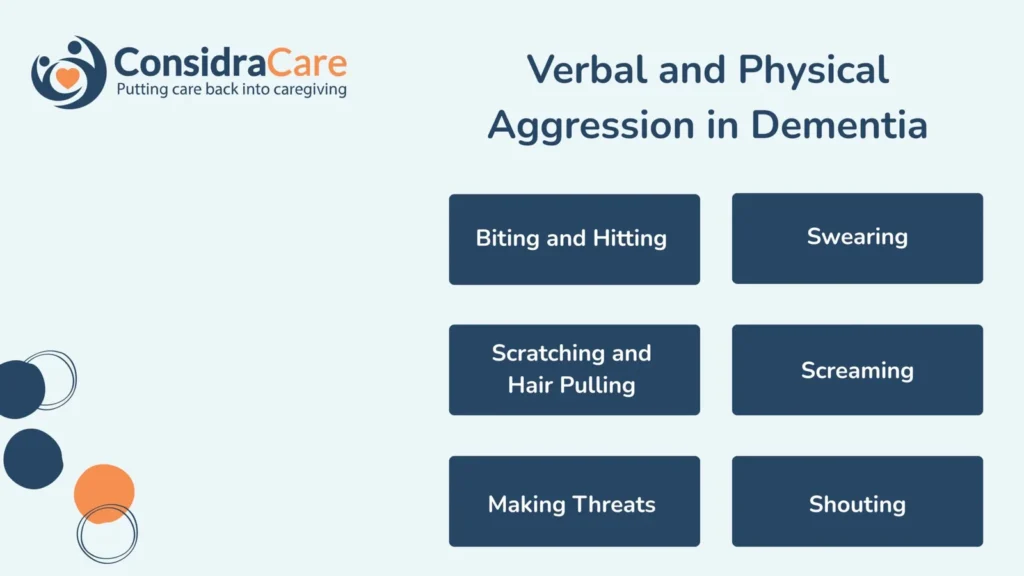
Many people believe that aggressiveness is a symptom of dementia. While this can be true, it is not always the case. Dementia takes different forms and affects people differently. Their aggressive behavior can be verbal and physical.
How to Handle Aggression with Empathy?
You will be focusing on three key areas when handling aggression in your person with dementia:
- Improving communication with them during the outburst.
- Maintaining a safe home environment that is less stimulating and overwhelming for their mind.
- Using de-escalation techniques to help calm them down and redirect their attention.
Before you do anything, always try to look for hidden triggers that may be the reason behind the behaviour in the first place.
1. Step Back and Ensure Safety:
If the person becomes physically aggressive—hitting, kicking, or throwing objects—take a step back. Avoid restraining them unless it’s absolutely necessary to prevent harm. Give them space to cool down. Make sure any dangerous objects (like sharp kitchen tools) are out of reach.
2. Speak Gently and Move Slowly:
Use a quiet, steady voice. Avoid raising your voice or rushing movements. Sudden gestures or loud tones can make the person feel threatened, even if you’re trying to help. Keeping your own body language relaxed can have a calming effect.
3. Avoid Arguing or Correcting Them:
If the person says something that’s not true or seems confused, don’t try to correct them. Instead of arguing, gently change the topic or respond in a way that keeps the peace. For example, if they accuse you of stealing something, you might say, “Let’s look for it together,” instead of denying it.
Arguing with a person with dementia will cause more distress, as you can't help them understand logic or give reasoning. You might explain a fact or correct a misunderstanding, but minutes later, they may repeat the same statement. Arguing in these loops causes frustration for both sides.
4. Validate Their Emotions:
Using the technique of validation can quickly de-escalate the situation. Let them know you understand how they feel. Simple phrases like “I see you’re upset,” or “I know this is hard” can help the person feel heard and reduce their need to fight or resist. Validation is more effective than logic when emotions are high.
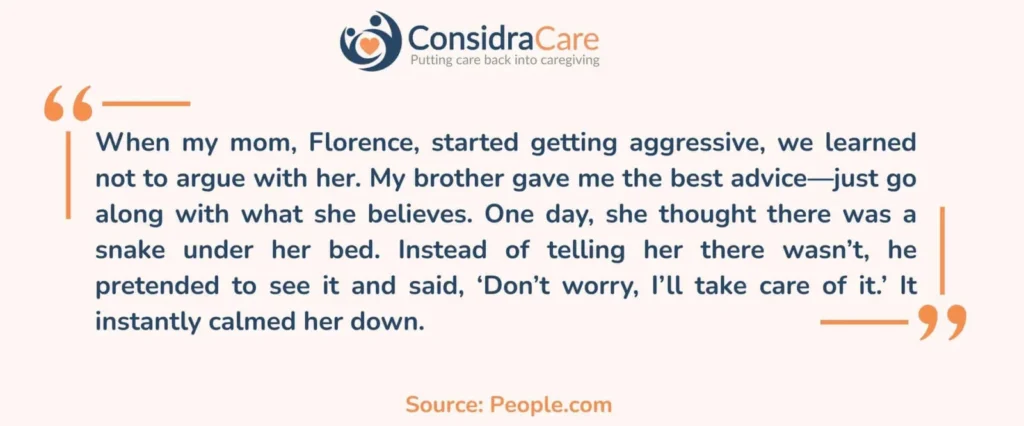
Look at Barbara's example to understand this method better.
Barbara Corcoran, a star on 'Shark Tank,' shared her family's experience caring for her mother, Florence, who was diagnosed with Alzheimer's disease.
5. Redirect Their Attention:
Redirection is a helpful strategy you’ll turn to often while caring for someone with dementia.
If the person is stuck in a loop of distress or anger, try gently shifting their focus. Offer a glass of water, suggest a snack, or involve them in an easy task like folding towels or watering plants. Familiar activities and routine-based distractions can help break the cycle of agitation.
6. Create a Calming Environment:
A quiet, comfortable space helps prevent and de-escalate outbursts. Reduce background noise, dim bright lights, and play soft music if they enjoy it. Keep treasured objects and familiar photos around the room. These can offer comfort and reassurance during tense moments.
7. Take Care of Yourself in the Moment:
If you feel yourself becoming overwhelmed, take a few deep breaths or step away briefly if it’s safe to do so. Managing aggression is emotionally draining, and your calmness plays a major role in helping the situation.
What Are Effective Non-Medical Ways to Manage Aggression in Dementia?
Non-medical ways to manage aggression in dementia include using calming sensory activities (like hand massage and aromatherapy), pet or doll therapy, creative arts, bright light therapy, and cognitive stimulation. It's also important to check for hidden causes like pain, discomfort, or illness, which often trigger aggressive behaviour.
An evidence report published by the Agency for Healthcare Research and Quality (AHRQ) supports that certain nonpharmacologic approaches to dementia care, such as music therapy, sensory stimulation, and caregiver education, show promise in managing behavioral symptoms without the side effects of medication.
Final Thoughts:
Violent behaviour in dementia can be heartbreaking, but it’s not the person’s fault—and it’s not yours either. With the right mindset and support, you can help manage this challenging symptom in your person with dementia.
More Dementia Care Resources:
-
How to Calm Dementia Patients at Night?
-
Caring for Elderly Parents with Alzheimer’s or Dementia: Top Caregiving Tips
-
10 Essential Foods for Dementia Patients
-
How to Encourage Seniors with Dementia to Eat More
FAQ's
1. What should I do if a dementia patient hits me?
Stay calm and step back to avoid harm. Don’t argue or try to control them. Once they’re calmer, try to understand what caused the outburst.
2. Can medications help control aggression in dementia?
Sometimes, but they should be a last resort. Always talk to a doctor. Non-drug strategies should be tried first.
3. How do I know if pain is causing aggression?
Watch for signs like grimacing, restlessness, or changes in appetite or sleep. If unsure, speak to their healthcare provider.
4. What are the early signs of aggressive behaviour?
Increased pacing, raised voice, clenching fists, or angry facial expressions can be early signs. Intervene early with a calming approach.
5. Is it safe to care for a violent dementia patient at home?
With the right support, training, and resources, home care is possible.
If organizing observations and concerns before discussing behaviour changes with a clinician would help, CareMapAI's Clinic Visit Prep Sheet lets you organize observations, concerns, questions, and current medications into a summary sheet to bring to doctor or memory clinic appointments.
Related articles

What is the Best Care for Alzheimer's Patients?
Alzheimer’s disease affects more than just memory; it reshapes how a person experiences the world. For families, this means learning new ways to support a loved one’s safety, well-being, and daily life.

4 Rs of Dementia Care: Core Care Principles for Dementia Distress
Caring for someone with dementia can be overwhelming, especially when dealing with challenging behaviors. To make caregiving easier, many caregivers rely on the 4 Rs of Dementia Care.

How to Calm Dementia Patients at Night?
Nighttime can be one of the most difficult times for individuals living with dementia. As the day ends, many experience increased confusion, anxiety, and agitation—a common pattern known as sundowning.
Caring for an aging parent? You don't have to hold it all in your head.
Answer a few questions and get a clear picture of what needs attention, what to do next, and how to share the load.